
Your Cart is Empty

-
- My account
- Rewards
Work Bags
Travel Bags
Small Leather Goods
Handbags & Everyday
Travel Bags
Small Leather Goods
Our leather
Only about 10% of the world's leather is vegetable-tanned. Ours spends thirty to sixty days in the tannery, and the colour goes on by hand.
Watch Paolo at workWhy it's worth keeping
Here's what nobody tells you about leather. The good kind improves as the years go by. The rest dulls and stiffens.
Paolo · Our tannery, Tuscany
Most leather is tanned in a day or two and sprayed with colour by a machine. Ours takes thirty to sixty days, and the colour goes on by hand, one hide at a time.
That's Paolo. At his last tannery he could use either hand to work the dye. Here they ask him to always use the same one, because the pattern changes if he switches, and they want every hide to carry the same hand. He asked not to be filmed, so you only get his hands.
Why by hand
Sprayed colour sits on top as a layer. A layer can chip, and once it chips the raw leather shows through.
Worked in by hand, the colour soaks deep into the hide. There's no layer to fail, so a knock or a scuff just becomes part of it.
That's a full-time job for one person. It's worth it.

The tanneries
Tanning is what turns a raw hide into leather. Ours is vegetable-tanned, with natural tannins from tree bark and plants, the way it's been done in Tuscany for centuries. The hides move through progressively stronger tanning baths for thirty to sixty days. The result is a denser, firmer leather with an open grain that breathes and responds to use.
Nineteen years, the same tanneries, the same makers.
Inside the tannery
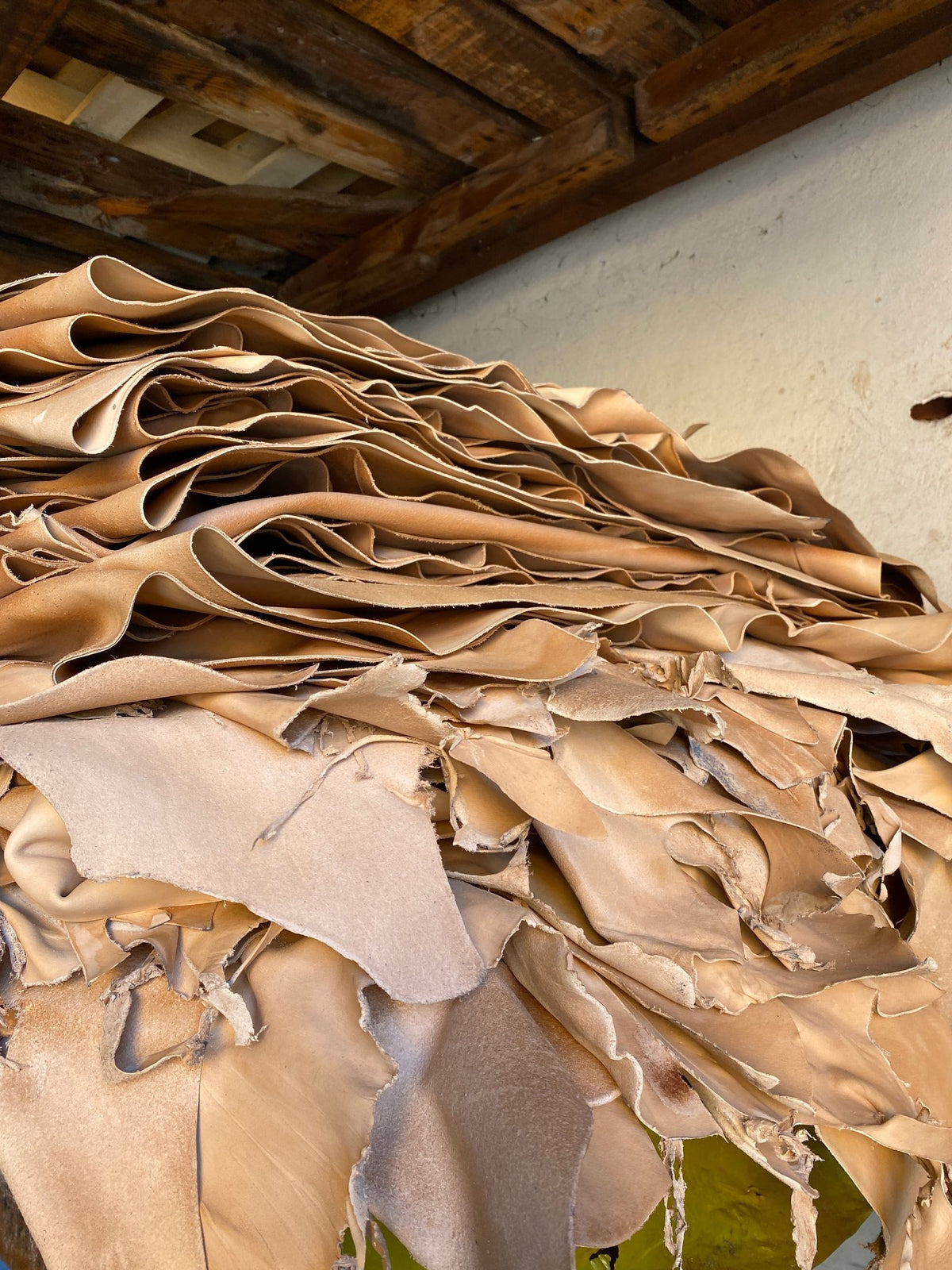
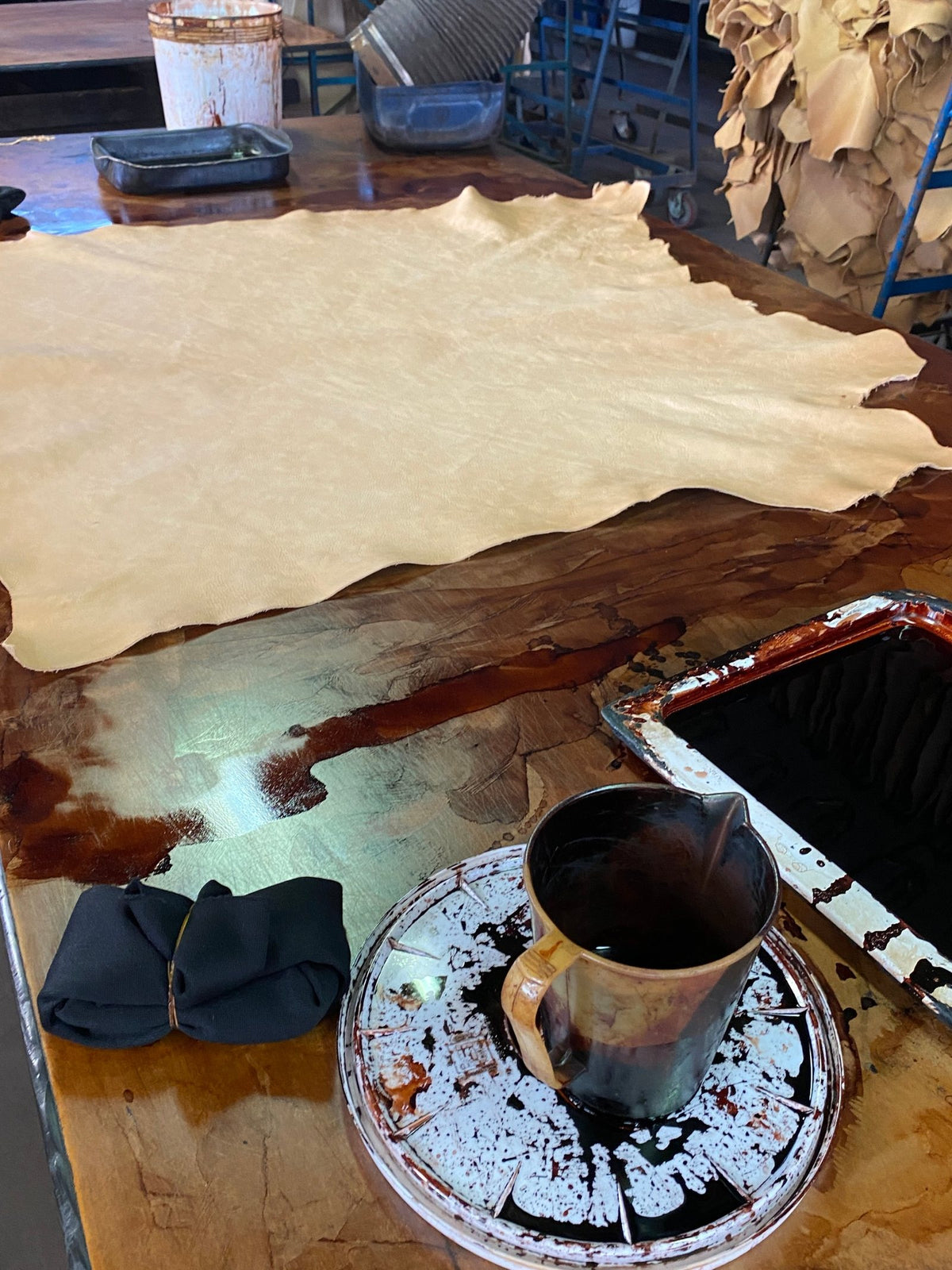
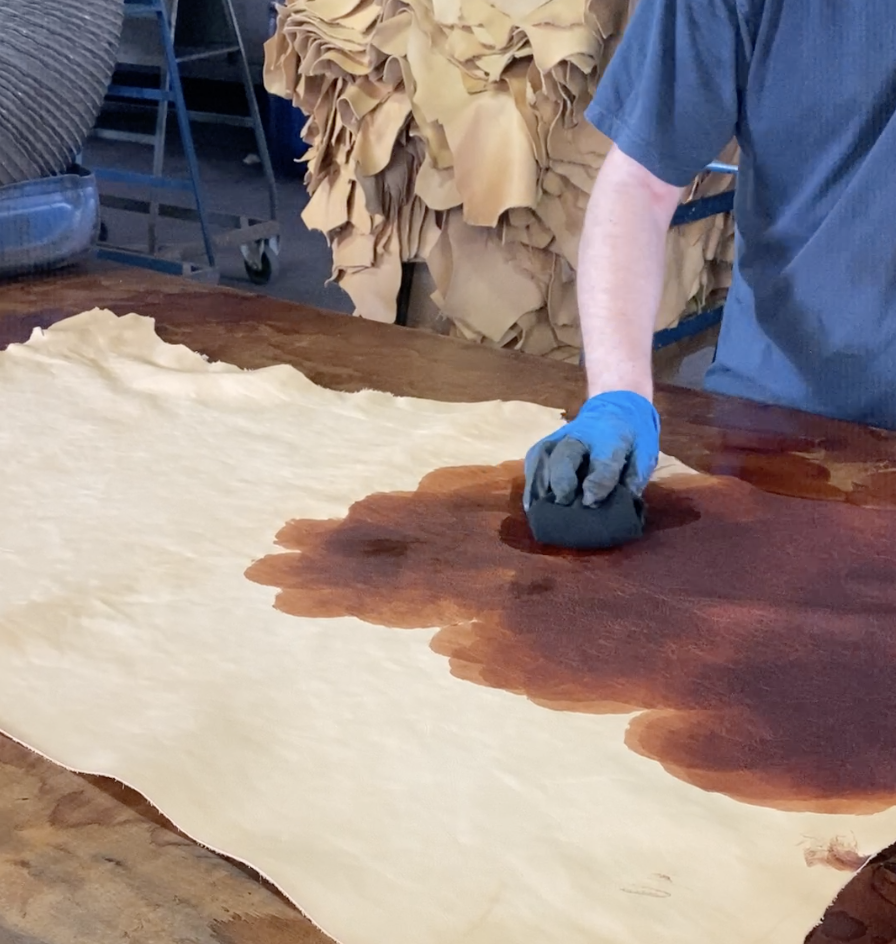
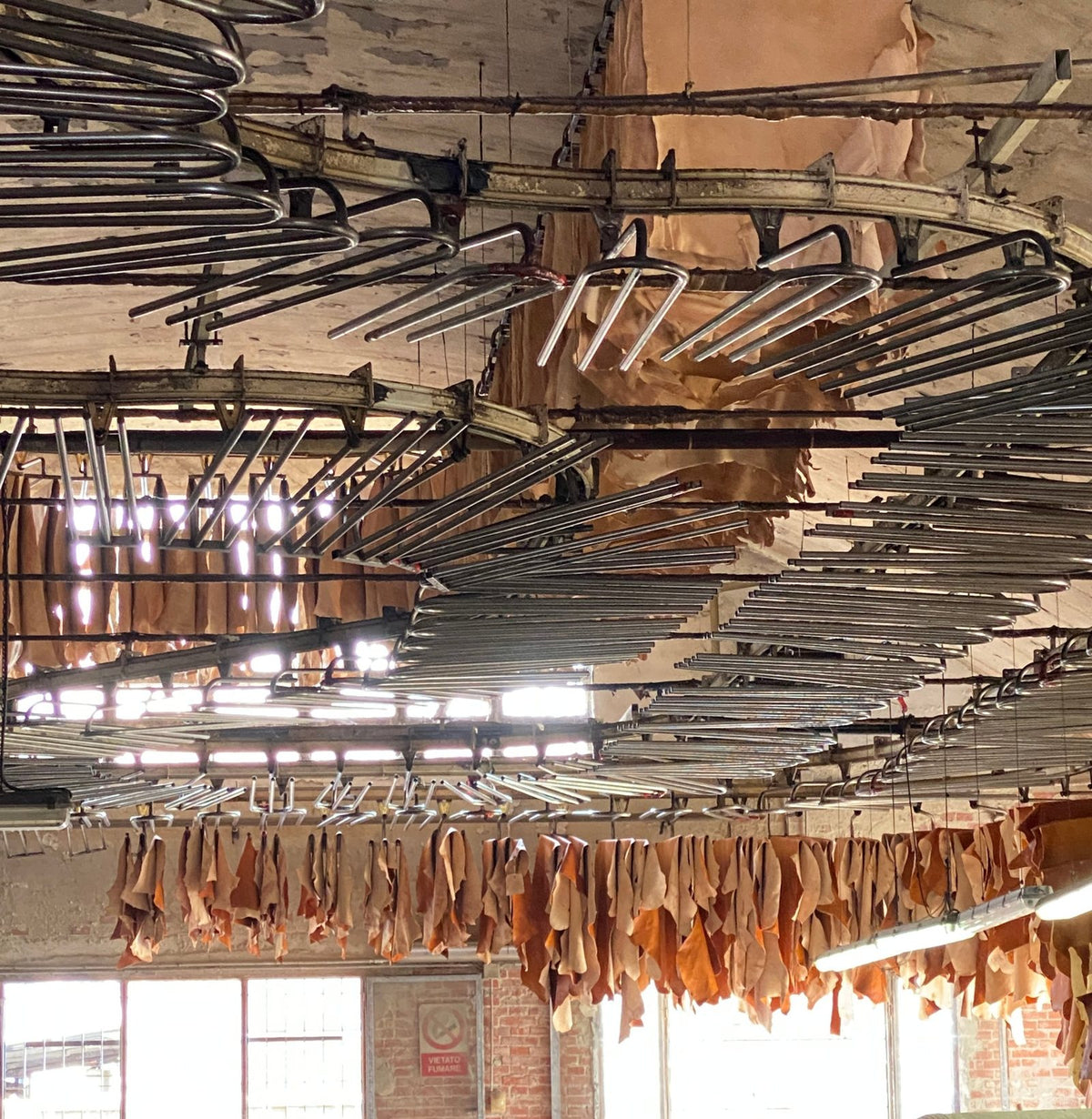
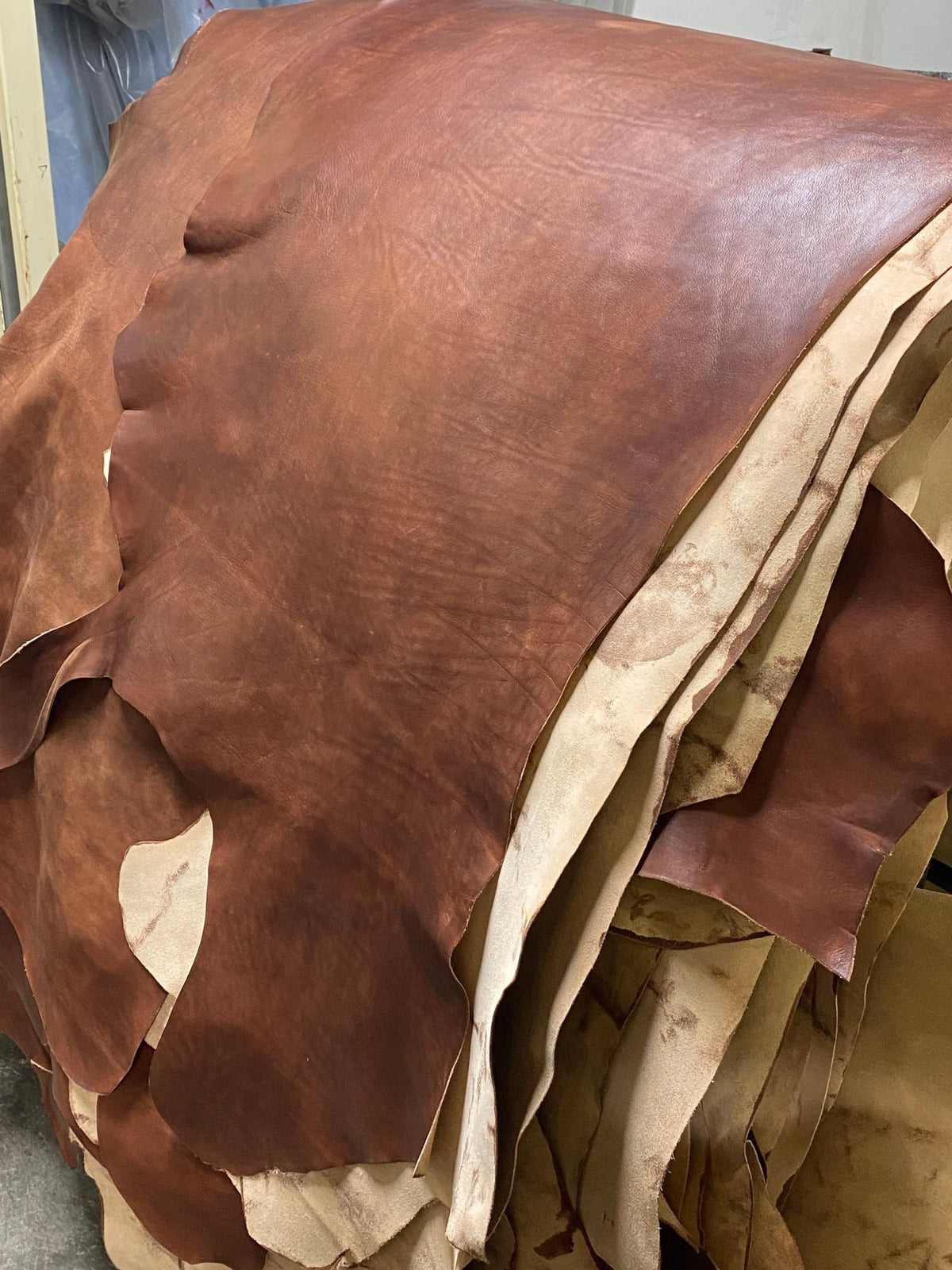
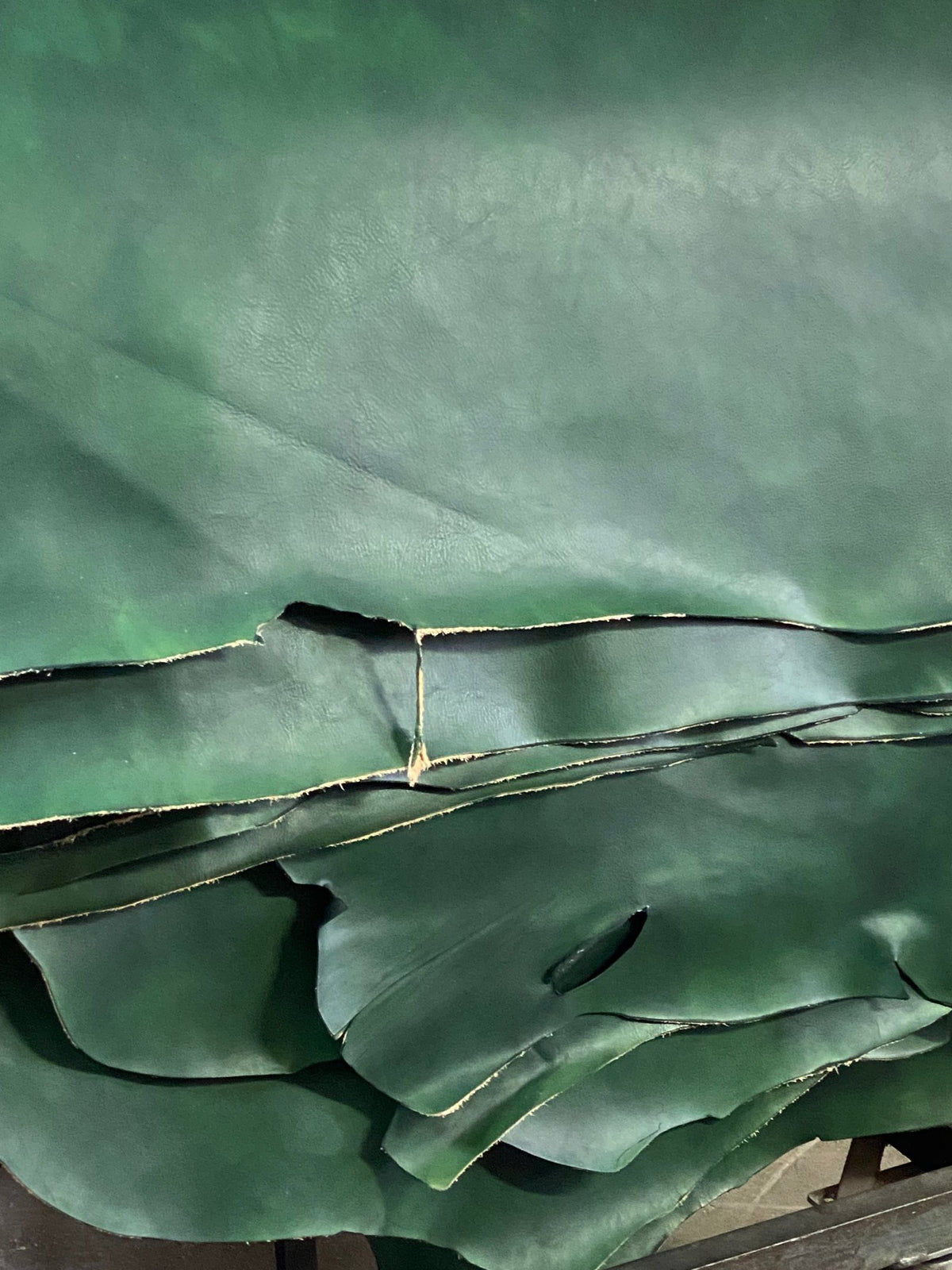
About 90% of the world's leather is chrome-tanned: fast, cheap and consistent. Day one is the best it will ever look. Vegetable tanning takes weeks, and the leather keeps changing for years.
Process. Natural tannins, thirty to sixty days in the tannery.
Colour. Worked in by hand, deep into the hide.
On day one. Structured, with a natural feel and visible character.
Over time. Softens, darkens and develops a patina of its own.
Grain. Full, open, unsanded. No coating hiding the hide.
Process. Chromium salts, a day or two in chemical drums.
Colour. Usually sprayed on, sitting on the surface.
On day one. Soft, uniform, consistent colour.
Over time. The coating can dull, stiffen and wear through to the hide beneath.
Grain. Often corrected or coated to hide imperfections.
There's a two-second test you can do in any shop. Try the leather smell test →
The patina
Because nothing is sprayed on to seal it, the leather takes on the marks of where it's been. The patina is the record. No two are the same, because no two lives are.
Day one
Structured. Colour at its lightest. The grain is fully visible. No coating, no correction.
First 60 days
The leather softens and begins to shape itself to how you carry it. Colour deepens slightly.
Year one
Patina develops. Colour grows richer. Areas of wear take on a soft sheen.
Year five +
It looks better than it did on day one. Not despite use, but because of it.
Want to see it? Two Belfasts, two years apart →
The finishes
Both are made from the same full-grain, vegetable-tanned leather from our Tuscan tanneries. The difference is the finish, and how each one ages.
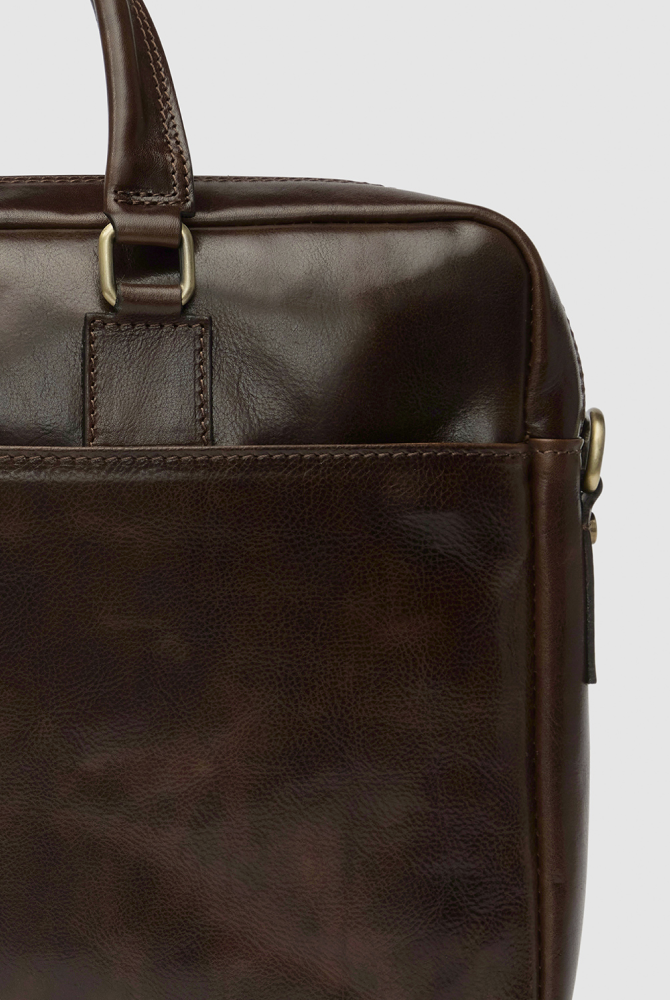
Polished finish
A polished, luminous surface. Not coated: the sheen comes from the finishing process, not from a synthetic layer, and the grain stays fully visible.
How it ages. The sheen deepens. Areas of use take on a richer, darker tone, and the contrast between worn and new is part of its character.
Terra · Moro · Forest · Honey · Rosso · Jet · Saffron · Cuoio
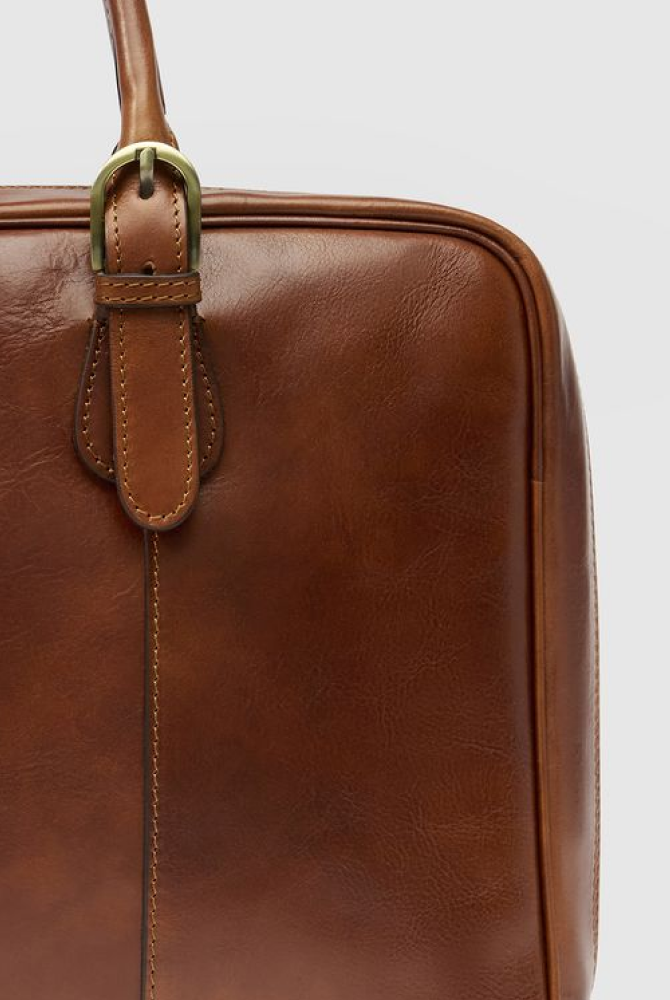
Matte finish
The same leather, finished matte. Softer to the touch from the start, more understated than Classica and just as durable.
How it ages. The patina comes more gradually. The surface softens and takes on depth rather than sheen, becoming quieter and richer at once.
Espresso · Earth · Ink · Burned
Honest disclosure
Vegetable-tanned leather is the foundation of everything we make. We also offer a small selection of other leathers where a piece genuinely needs them: coated, pebble grain and smooth calfskin, chosen for water resistance, a wider colour range, or a texture vegetable tanning can't produce. Not to cut costs, and not to chase trends.
Accent pieces are made to the same standard and made to last. The difference is that they won't develop a patina the way Classica and Opaca do. If the way leather ages matters to you, and if you've read this far it probably does, choose Classica or Opaca.
Common questions
Every leather scratches. What matters is what a scratch looks like afterwards, and that comes down to how the colour got into the hide.
Ours is hand-dyed, so the colour goes deep into the hide rather than sitting on the surface. A scratch moves the leather around, but the colour underneath is the same. It reads as a mark, not as damage, and most light ones soften and blend as the leather wears in.
Coated leathers behave differently: scratch through the finish and you see the raw hide underneath, and over time the coating can crack. Colour-sprayed leathers have pigment on the surface only, so a scratch shows as a pale line.
Light marks on our leather usually lift with a soft, dry cloth. Deeper ones stay, and they should.
No. It's a natural material, and we haven't coated it, because a coating would seal the surface and remove what makes this leather what it is.
Light rain and splashes are nothing to worry about. Blot with a soft cloth and let it dry naturally, away from direct heat. Heavy water can affect the colour, so carry it in the rain when you need to, but don't go looking for it.
For extra protection, a leather waterproofing spray helps. Reapply every six months or so, and always test it on a small, hidden area first.
When it's new, there's nothing to do. For the first six to twelve months of everyday use, a wipe with a soft, dry cloth is all it needs.
When the colour starts to look dull or the leather feels dry, work a little neutral leather conditioner in with a clean cloth. Keep it out of long direct sun and away from heaters. If it gets wet, blot it and let it air dry, never with a hair dryer. Store it upright in its dust bag.
Longer than you'll expect. There's no surface coating to crack or peel, and because the colour is dyed into the hide rather than sprayed on top, it doesn't wear pale at the corners. It ages instead of wearing out.
The bags are made in small batches in workshops in Italy we've worked with for close to two decades. And if a stitch fails or a piece of hardware breaks, write to us. We repair what can be repaired.
It depends what you're comparing it to. Against the big names, far more of what you pay goes into the leather and the making rather than the logo.
Against mass-produced bags, it can cost more at the start, and it's better value over time. Ours is full-grain and vegetable-tanned, thirty to sixty days to tan, from the same tanneries we've bought from for nineteen years. Most bags at the lower end use chrome-tanned or corrected-grain leather, which is faster and cheaper to make and won't age the way ours does. Buy one of those every couple of years, or buy this once.
That's not a promise. It's what vegetable-tanned leather does when it's used.
Most loved
Our customer favourites
