

Your Cart is Empty
On the leather
How to Recognise Leather Worth Carrying for a Lifetime
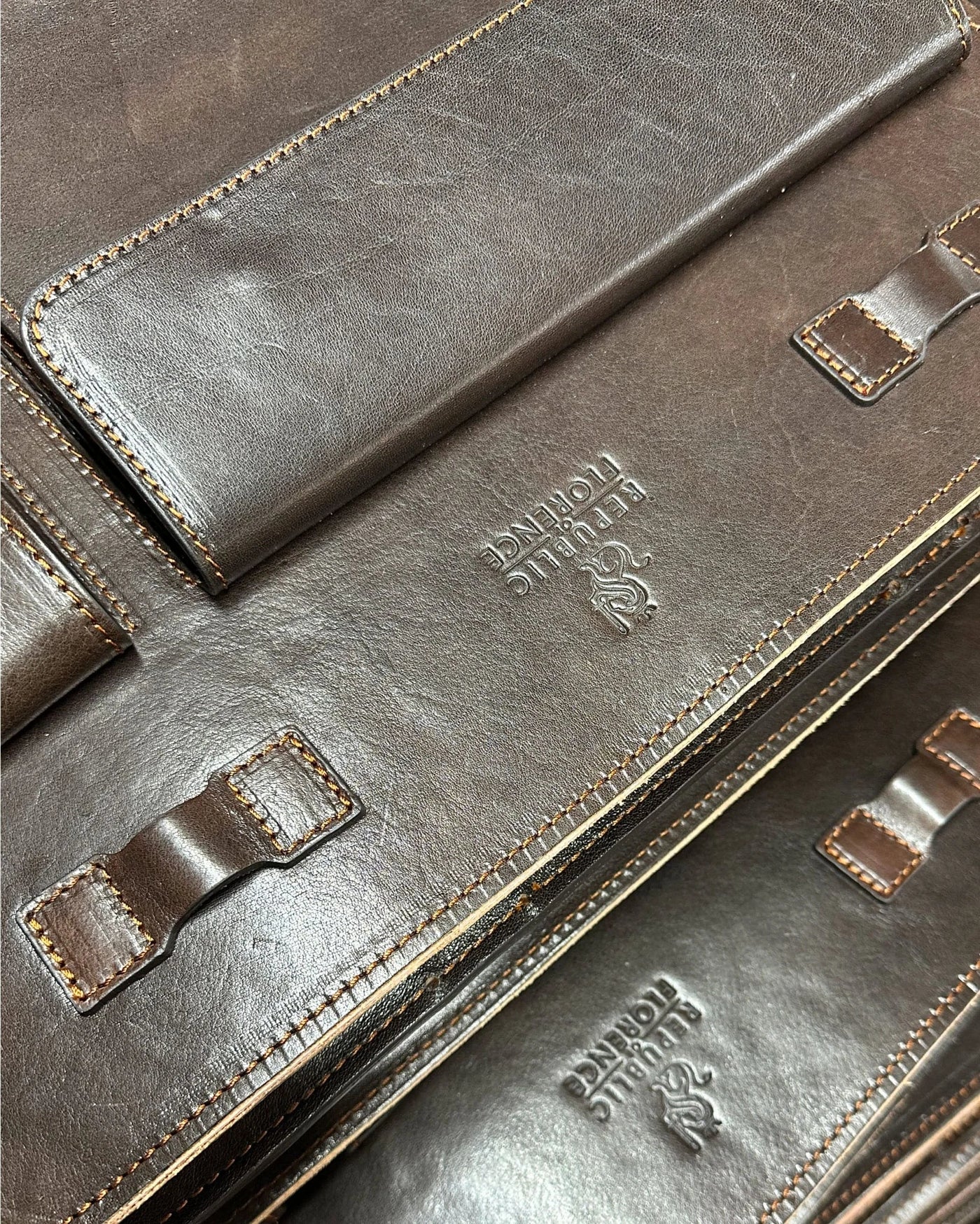
The first time you run your hand over truly good leather, you'll know it. There's weight without heaviness, softness with depth, a sense of something already alive before it reaches you. It isn't another accessory off a shelf. It's a bag you'll still be reaching for years from now, taking on the marks of your life as it goes.
The trouble is that plenty of bags are dressed up to look the part. Smooth, shiny, factory-perfect on the shelf. A season later the truth shows: cracks, peeling, stiffness, fading. What felt like an investment turns out to be a compromise.
So how do you tell what's real? How do you know if the bag in your hands is built to stay with you or to fall apart in a year? It starts with knowing what's worth carrying.
Understand how the leather was made
Leather is never just leather. How it was tanned decides almost everything about how it will age.
More than 90% of the world's leather is made for speed: chrome-tanned, soaked in chemicals, pressed and coated until the grain is erased. What's left is a smooth, uniform surface designed to look flawless. But that finish is a coating, and coatings crack, stiffen, and peel, sometimes within months. Once that happens, it can't really be undone.
Full-grain, vegetable-tanned leather is made the slower way: hides steeped in tannins from bark, leaves, and roots over weeks rather than days. The process keeps the grain intact and leaves no synthetic coating on top. It improves with use, deepening in colour and taking on a patina shaped by how you carry it.

Look beyond the label
Not every word on a tag means what it sounds like.
"Genuine leather" sounds reassuring, but it's often one of the lowest grades: scraps bonded together with chemicals and binders. "Top grain" has usually been sanded and coated to hide imperfections, which strips away much of the strength and character along with them.
The mark to look for is full-grain, vegetable-tanned. Full-grain keeps the hide's surface intact, where the strongest fibres are. Vegetable tanning keeps it free of the synthetic sealants that stop leather ageing well. Together they make a leather that doesn't just survive, it gets better.

Trust your senses
Your hands, eyes, and nose will tell you more than a swing tag.
- Feel. Run your fingers over the surface. Real leather is warm and responsive, not cold or plastic. Slight variations, gentle ridges, small shifts in grain are not flaws, they're proof it's a natural hide.
- Look. Natural leather has depth. The surface shifts with the light in a soft, lived-in way rather than a hard, uniform gloss.
- Smell. Vegetable-tanned leather smells of bark, wood, and earth. A sharp, chemical smell tells you the opposite.

The scratch test
Here's one you can do in the shop. On leather where the colour is dyed deep into the hide, a light scratch or scuff tends to blend in, because the same colour runs below the surface. Often it settles further with use or buffs out with a soft cloth.
On coated or surface-sprayed leather, the colour sits only on top. Scratch it and you expose a paler layer underneath, a light mark where the finish has broken. If a small scuff shows a pale line, the colour is only skin-deep, and so is the leather's quality.
Look at how it's put together
Even good leather can be let down by careless making. Look at the construction as closely as the hide.
- Edges that are smooth and sealed, not fraying.
- Even, deliberate stitching with no loose ends.
- Hardware with real weight to it, that locks and glides rather than rattles.
The best pieces are often cut and stitched in small batches, with one person carrying a piece through rather than gluing it together at speed. It shows in whether a bag simply holds together or properly holds up.

Watch how it ages
Leather worth carrying doesn't stay frozen; it changes. Looked after, it softens without losing shape and deepens in tone, gathering the marks of use as it goes.
The cheaper alternatives don't age, they break: cracks spread, finishes flake, corners give out. A simple test when you're deciding: trust the makers who show their leather after years of use, not just on day one. If a brand is happy to show a bag that's been carried for a decade, that tells you something.

Make it yours
Leather is only really complete once it belongs to someone. A set of initials pressed into the grain, in gold or silver foil, turns a bag you bought into one that could only be yours. It's a small mark, but years from now it won't just say whose it was. It'll say when, and why.

The last question to ask
One question settles it: can you picture still carrying this in years to come, not because it has merely survived, but because it will have got better? If you can imagine keeping it, or passing it on, rather than replacing it, you've found leather worth carrying.
The difference between a disposable accessory and one you keep is mostly what you can't see at first glance: where the hide came from, how it was made, and how it lives with you.
